HAMACA inaugura el seu arxiu en 2007 amb un catàleg de 200 peces, en el qual es troben representades les principals obres i artistes de la història del vídeo d'àmbit estatal des dels anys 60. Hi ha una cosa en la qual HAMACA va ser pionera i que és present en el seu arxiu des de l'inici: gran part dels seus treballs poden ser visualitzats en línia, constituint aquest fons digital com un espai per al coneixement que possibilita processos de recerca i educació. L'arxiu Hamaca es converteix, així, en un lloc de consulta habitual per a moltes usuàries: artistes, estudiants, comissàries, aficionadis, institucions públiques, educatives, centres d'art… Des de llavors, l'arxiu ha anat creixent any rere any mitjançant l'ingrés de noves obres d'autoris ja catalogades i de convocatòries per a la incorporació de novis autoris.
Comitès de selecció
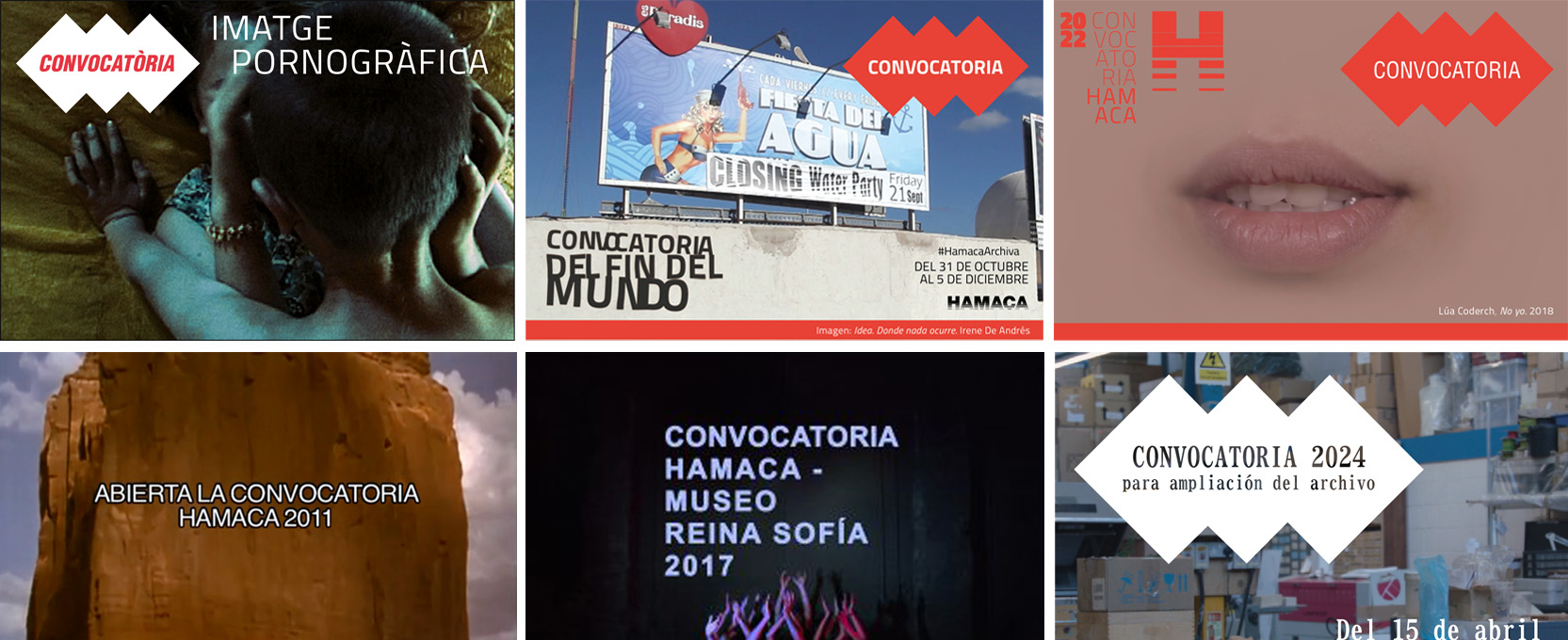
Per a totes les ocasions en les quals l'arxiu s'obre a la recepció de noves peces, HAMACA constitueix un comitè especialitzat: un jurat extern, heterogeni i coneixedor de l'àmbit de l'audiovisual experimental, la seva història i els seus vincles amb els contextos socials que interpel·la.
→ Primer comitè de selecció: La selecció inicial va ser realitzada per un equip de 8 especialistes: Susana Blas, Eugeni Bonet, Juan Guardiola, Esther Regueira, Fito Rodríguez, Jorge Luís Marzo, Lola Dopico i Virginia Villaplana. Aquest comitè va determinar un llistat de 100 artistes que consideraven havien de formar part d'aquest catàleg inicial a causa de la seva trajectòria, rellevància del seu treball i projecció. Les directrius que es van establir per a la selecció del primer comitè venien marcades per la intenció d'introduir aquellis autoris i aquelles obres que tinguessin un destacat caràcter històric i representatiu de la producció de vídeo independent des dels 60s fins a l'actualitat.
→ Segon comitè de selecció: en 2008, tenint en compte la quantitat d'artistes que havien quedat fora del catàleg durant la primera selecció, es va obrir la primera convocatòria pública per a ampliar l'arxiu. Aquesta vegada, el comitè d'experts va estar format per Laura Baigorri, Chus Martínez, Pedro Jiménez i Gabriel Villota. Els criteris de selecció proposats en aquest cas perseguien donar l'oportunitat a artistes més incipients del mitjà. Aquesta convocatòria va permetre ampliar el catàleg a pràctiques més emergents com el vjing, el documental creatiu o el clip musical.
→ Tercer comitè de selecció: en 2011 va obrir una altra convocatòria per a la inclusió de nous vídeos a l'arxiu. El comitè d'expertis va estar format per Josetxo Cerdán, Nuria Enguita, Antoni Mercader i Aimar Arriola. A grans trets, van identificar quatre línies de força particularment vigents entre els treballs rebuts: el desplaçament de les gramàtiques del documental cap a contextos de significació més amplis, la consideració de la imatge fílmica i el vast àmbit del cinema, la reocupació feminista i queer de l'àmbit de la representació, i la reactivació des de l'art d'unes certes pràctiques conceptuals dels 60, 70 i 80 en relació amb les estructures de significació, especialment el llenguatge.
→ Quart comitè de selecció: per a la convocatòria de 2013, llançada en col·laboració amb el Museu Nacional Centre d'Art Reina Sofia, el jurat va estar integrat per Miguel Fernández Labayen, Beatriz Herráez, Elena Oroz i Carlos Trigueros. Es va identificar un interès estès per l'ús d'eines digitals —Facebook, Google, YouTube, Skype— i per les pràctiques domèstiques com a materials d'arxiu i fonts documentals. També, el creixent ús de formats com el Súper 8 o el vídeo analògic, demostrant la vigència d'eines tecnològiques pretèrites. Algunes de les peces seleccionades abordaven relectures de pràctiques performatives a partir de les seves relacions amb altres disciplines, com l'escultura o la fotografia. Des de l'àmbit artístic i documental, la presència de projectes de recerca i assajos audiovisuals va tenir també una presència destacada.
→ Cinquè comitè de selecció: en 2015 va tenir lloc una segona convocatòria finançada pel MNCARS. L'equip d'avaluació va estar configurat per Virginia Torrente, Lucía Casani, Marina Díaz i Cristina Cámara. El comitè va destacar la gran riquesa del gènere barrejant llenguatges propis del cinema, el vídeo i internet amb total naturalitat. Entre la selecció es van trobar pràctiques documentals de variat tipus, treballs amb found footage, o obres que utilitzen com a base les interfícies d'internet i les últimes tecnologies de comunicació.
→ Sisè comitè de selecció: la convocatòria de 2017 va ser l'última co-organitzada amb el MNCARS. El comitè va estar format per Cristina Cámara, Chema González i Marc Vives. En aquell moment, HAMACA ja era àmpliament considerada un arxiu extens de les diferents propostes de l'audiovisual a l'estat espanyol des dels seus orígens: tant un repositori expandit del vídeo com una plataforma per a estudiar les seves transformacions i possibilitats en la contemporaneïtat. Va haver-hi una incorporació destacada d'assaig documental de caràcter antropològic, d'exploracions melancòliques del mitjà fílmic i treballs entorn de polítiques del cos.
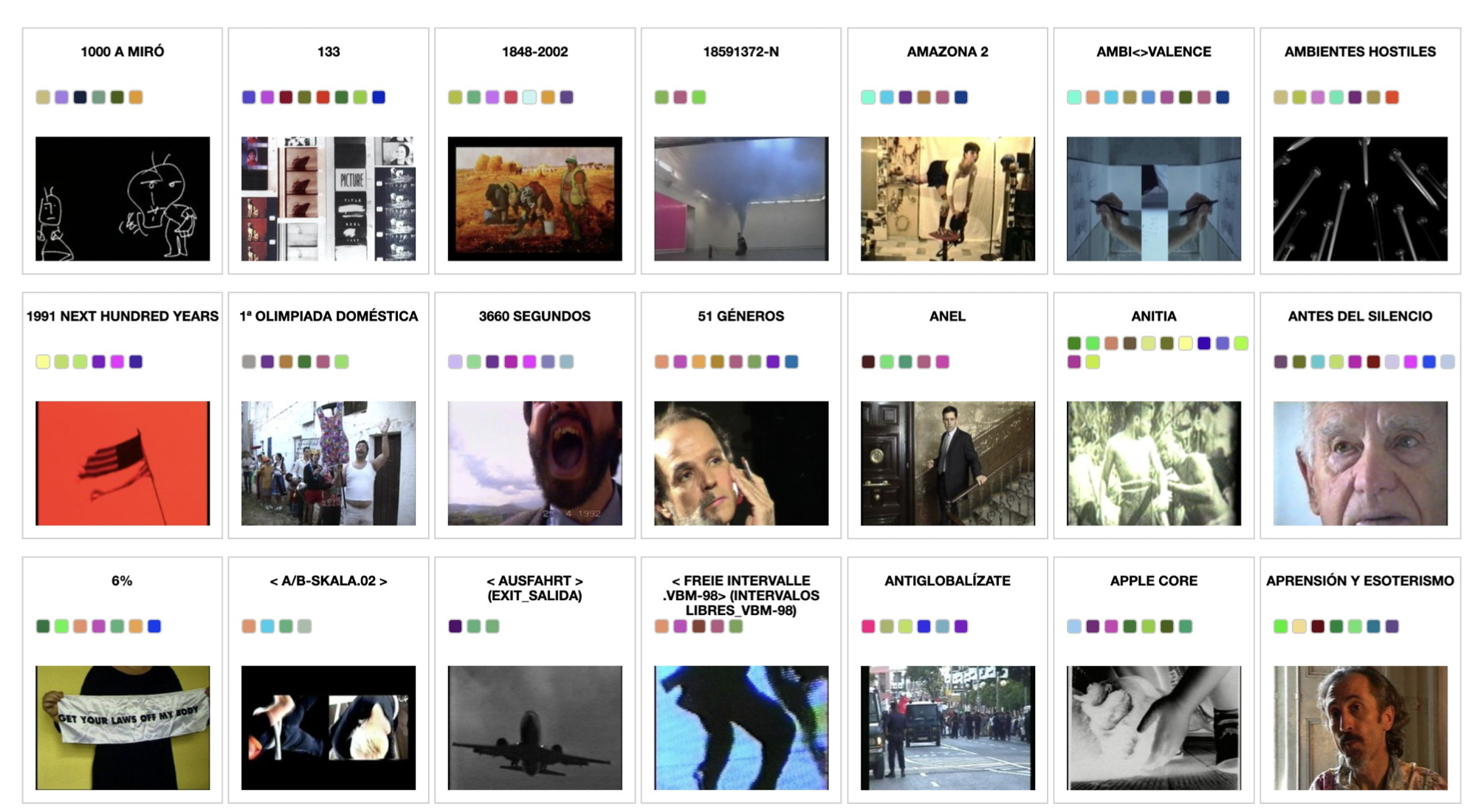
→ Setè comitè de selecció: En 2020 HAMACA va iniciar un nou tipus de convocatòries públiques per a la incorporació de vídeos: les convocatòries específiques. A partir de buits d'arxiu que s'identificaven no corresposts amb la realitat i interès del mitjà, aquest tipus de convocatòries abordaria temes i/o llenguatges concrets per a enriquir el catàleg aquí on es trobés més necessari. Així, en 2020 i en col·laboració amb l'Institut d'Estudis del Porno, es va obrir la convocatòria Imatge pornogràfica, el jurat de la qual va estar format per Ona Bros, Francesc Ruiz i Lucía Egaña.
→ Vuitè comitè de selecció: També en 2020 va tenir lloc una altra convocatòria general, la qual va fer partícips en el seu comitè d'avaluació a Tjasa Kancler, Alexandra Laudo i Albert Alcoz. La convocatòria va destacar per la incorporació de treballs que desafiaven les lògiques de poder i representació hegemòniques des de diferents formats. Va destacar també la presència de peces que incideixen sobre la materialitat dels suports audiovisuals, vídeassaigs que integren la subjectivitat i la veu en primera persona o que realitzen una revisió crítica de la història de l'art del segle XX des de problemàtiques actuals, així com l'interès per la memòria i el territori per a investigar i denunciar qüestions relacionades amb les polítiques ambientals i extractivistes.
→ Novè comitè de selecció: La convocatòria general de 2022 va comptar amb Andrés Duque, Pablo Martínez i Marta Sesé com a jurat. De la selecció va destacar la preocupació per la memòria històrica, el registre i l'arxiu personal, així com la predominança de la subjectivitat narrativa, enfocaments antropològics i de visibilització d'identitats dissidents; interessos i preocupacions sobre el peremptori de la vida, les relacions interespècie, la pertinença, la dissidència sexual i la reivindicació de formats analògics.
→ Dècim comitè de selecció: En 2022 també es va obrir la Convocatòria de la Fi del món, destinada a la recepció de peces vinculades a l'àmbit de la crisi ecosocial. Van configurar el jurat Toni Navarro i Jara Rocha, que van obrir la noció de fi de món entenent que «amb el desenvolupisme dels 80's i els 90's ja es van acabar mons, que la violència colonial ha aconseguit sens dubte acabar amb molts mons i no obstant això en simultani altres nous, solidaris i exuberants continuen emergint, que els mons normatius capacitistes i expertcèntrics s'acaben amb les crisis ontoepistèmiques en sèrie i d'aquí emergeixen subjetivacions, tècniques i comunitats altres com les diskas, les legas, les enebé».
→ Onzè comitè de selecció: La convocatòria general de 2024 va comptar amb Daniel Gasol, Zaida Trallero i Sergi Álvarez Riosalido com a jurat. Aquesta edició es va veure marcada per la democratització i ús de la pràctica d'assaig audiovisual des del camp de l'art, la recuperació d'arxius analògics i una temàtica recurrent: el rural com a manera de recuperar la memòria, altres formes de vida, el concepte d'origen, els treballs vinculats a la terra i espai a reconsiderar des d'un escenari industrialitzat i feroç.
→ Dotzè comitè de selecció: En 2025 va ser oberta una nova convocatòria específica, la Convocatòria Bergamasca, que es feia servir de la figura de José Bergamín i els seus mons perduts i imaginats per a cridar a la recepció de vídeos que treballessin entorn d'experiències de llenguatge, memòria històrica i cultures menors/populars. Obria, des de l'estrat temporal del perdut i la dimensió material dels llenguatges audiovisuals, portals de preguntes i misteris pels quals aproximar-se a un univers analfabet que enrareix.
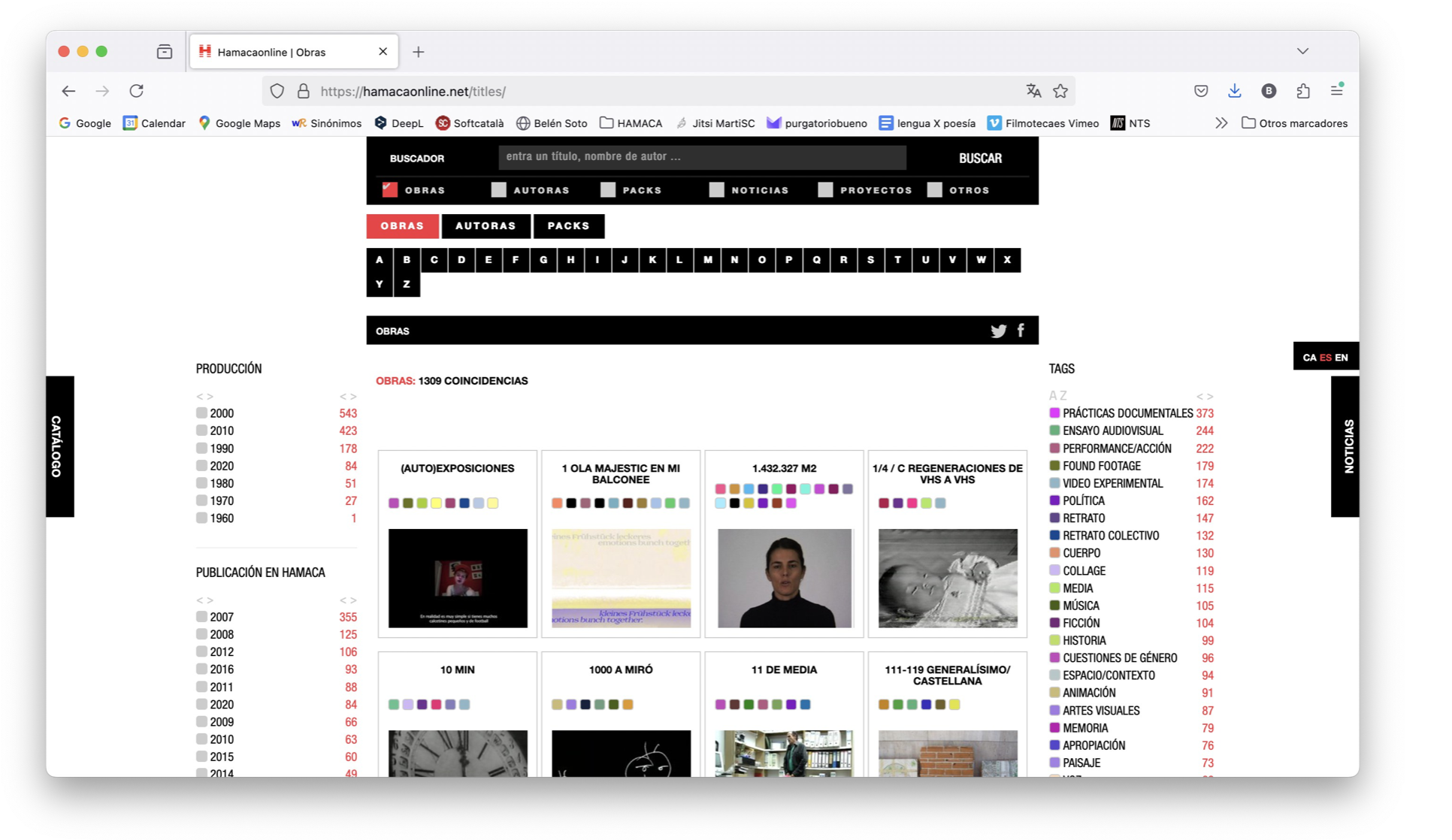
Evolució de la taxonomia
La taxonomia d'HAMACA ha anat prenent complexitat i rigor a través del creixement i treball en l'arxiu. Actualment és una excel·lent eina al servei de la identificació, pedagogia i accessibilitat de l'audiovisual arxivat, un marc conceptual basat en unes paraules que nomenen i interrelacionen les peces del catàleg des de lògiques de precisió, usabilitat i sensibilitat lírica cap a les peces.
→ Primera taxonomia: Amb el llançament de la primera versió web de l'arxiu (2007) apareix la primera taxonomia del catàleg, articulada a partir de les paraules que les mateixes autores utilitzaven per a etiquetar les seves peces. Des d'una interfície comuna de l'època, els tags s'organitzen en forma de núvol, sent els termes més repetits els de menor grandària. El mètode, senzill i participatiu, va resultar simpàtic però poc funcional: eren comuns les repeticions de termes en singular i plural, els sinònims, les contradiccions o l'escassetat de tags, segons l'obra.
→ Segona taxonomia: A través de la recerca i de la col·laboració amb un equip de treball format per Eugeni Bonet, Albert Alcoz i Violeta Mayoral, HAMACA aprofita el canvi a la seva segona versió web (2016-2017) per a fer el treball de conceptualitzar una taxonomia de major precisió per al catàleg. En aquest procés, i sota la proposta d'emprar termes que ampliessin la possibilitat de pertinença en lloc de limitar-la, es cregui un sistema de tres nivells: llenguatge audiovisual, matèria i elements destacats. A partir de llavors seria el personal responsable d'arxiu qui catalogaria les peces, i per a això l'equip creador de la taxonomia va fer una primera revisió completa de l'arxiu que implementava aquesta nova taxonomia.
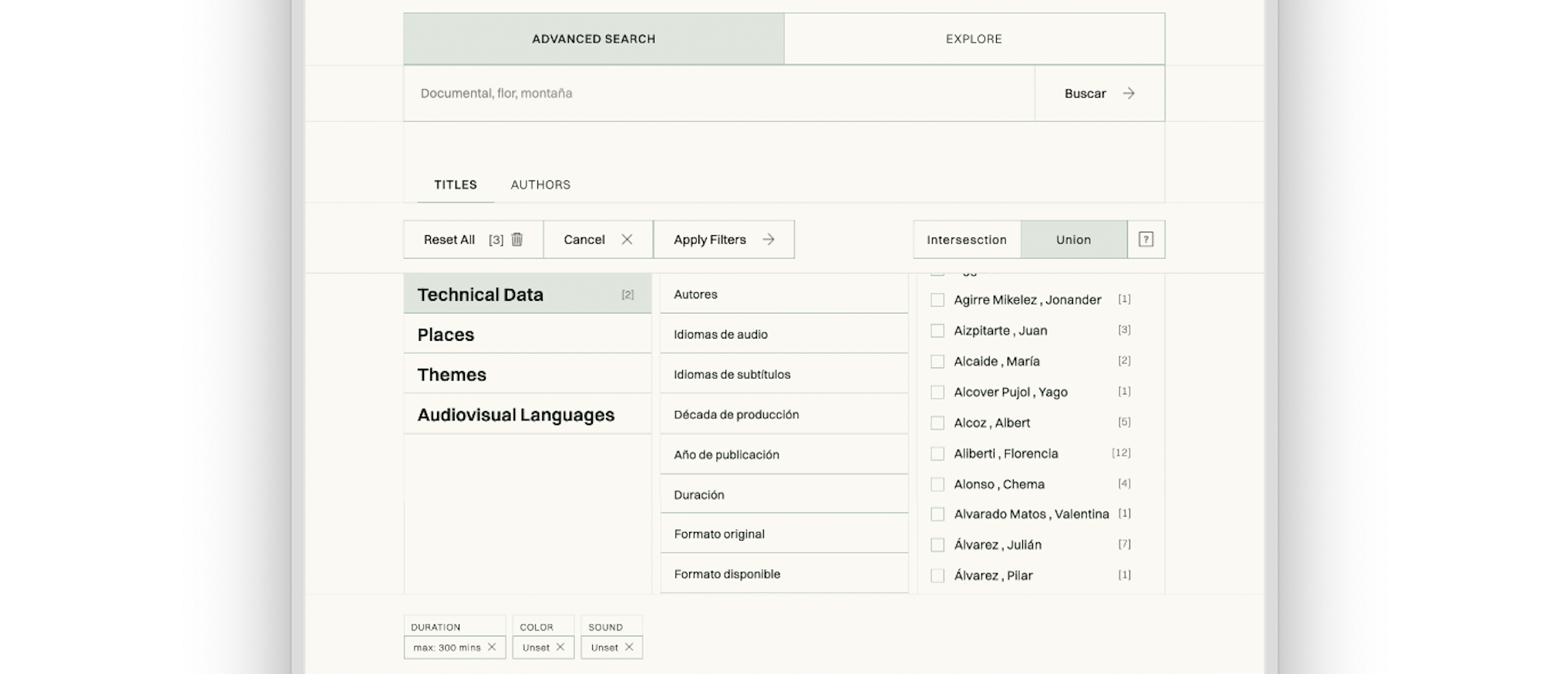
→ Tercera taxonomia: Des de 2024 HAMACA ha estat configurant la seva pròxima taxonomia, també vinculada a una nova renovació de la seva plataforma web. En aquesta ocasió el treball ha comptat amb la col·laboració de dos equips de treball: Ros Murray i Julia Cortegana per als filtres semàntics; Paloma Hernández, Martha Helga i Lorena Soria per als filtres tècnics. Així, la tercera versió de la taxonomia desplega un complex sistema ramificat de termes que permeten navegar i buscar peces a través de categories que reflecteixen les múltiples dimensions d'interès de l'audiovisual experimental catalogat.
Altres vies d'actualització del catàleg HAMACA
Durant la seva trajectòria, l'arxiu HAMACA ha activat diverses fórmules per a introduir obres en l'arxiu. Aprofitant la confecció de programes comissariats pel Cicle de Vídeo a la Gran Pantalla dut a terme als cinemes Maldà, es va demanar als programadors suggeriments que no trobessin en el catàleg per a ser convidats posteriorment a formar part de l'arxiu.
També es van introduir vídeos a través del projecte Caras B de la Historia del Vídeo Arte en España (2011, AECID) capitanejat per Nekane Aramburu i Carlos T. Mori, convenis de col·laboració amb el centre de producció i recerca artística Hangar o el centre d'art La Capella de Barcelona, o l'exposició Hecho en casa (2023) comissariada, de nou, per Carlos T. Mori en el centre Conde Duque de Madrid.