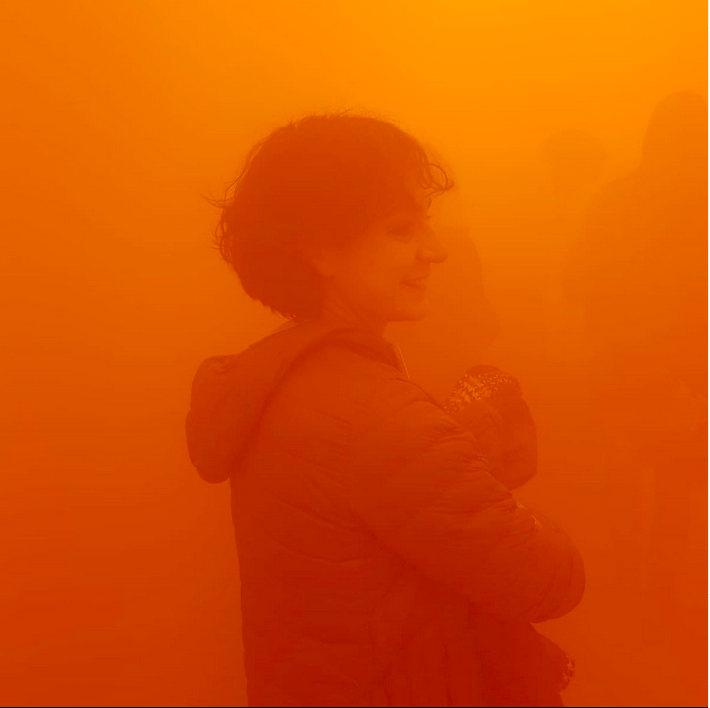
Giuliana Racco és artista visual i investigadora. A través del treball de camp, la recerca d’arxiu, la producció material i l’experimentació, desenvolupa obres que aborden críticament les nocions de frontera, inclusió/exclusió i desig. La seva pràctica es materialitza en projectes participatius, vídeos, publicacions, dibuixos, textos i altres formes híbrides.
La seva obra ha estat presentada en museus i centres d’art internacionals com la Fundació Suñol i Arts Santa Mònica (Barcelona), el Museum of Modern and Contemporary Art de Rijeka (Croàcia), el Fotomuseum Winterthur (Suïssa), el Museum of Modern and Contemporary Art de Estrasburg i LE CAP Centre d’arts plastiques de Saint-Fons (França), Kulturcentrum Ronneby (Suècia), la Fondazione Bevilacqua La Masa (Itàlia) i la Frith Street Gallery (Londres), entre d’altres. La seva fotografia de gran format Revelando, basada en tallers artístics participatius amb comunitats en risc d’exclusió social, es troba en exhibició permanent al Centre Cívic El Sortidor (Barcelona).
El seu curtmetratge High Roads (2023) parteix dels testimonis de quatre dones palestines que practiquen el SUMUD (resistència quotidiana), utilitzant el cos, la respiració i la ment com a eines davant l’ocupació militar. L’obra ha estat projectada en festivals com RETURN! Film and Art Festival (Weimar), L’Alternativa (Barcelona), Carlota International Political Film Festival (Viena), Interfilm (Berlín), International Kurzfilmwoche (Regensburg), Les Filministes (Mont-real) i el Chicago Palestine Film Festival, i ha rebut el premi BMW Group a la Sostenibilitat Social a Regensburg.
Racco ha participat en residències i programes de recerca artística a Espanya, Itàlia, Portugal, Croàcia, Luxemburg, Palestina i Colòmbia. Ha desenvolupat rols clau en contextos acadèmics i curatorials: va ser professora adjunta en el programa de postgrau en arts visuals dirigit per Lewis Baltz a la Universitat IUAV de Venècia, professora associada d’antropologia sociocultural a BAU (Barcelona), coordinadora del Pavelló Txec i Eslovac a la Biennal de Venècia (2008–2011), consultora del programa Encounters de Juntos Aparte dins de BIENALSUR (2017), i traductora principal per a MONOS Editions. També va formar part de la junta directiva de la PAAC (Plataforma d’Artistes de Catalunya) entre 2018 i 2021, i de la Comissió de Programa del centre Hangar (2017–2021).
Actualment és doctoranda a la Facultat de Canvi Ambiental i Urbà de la York University (Toronto). El 2023, va coeditar amb Lucía Egaña Rojas la publicació La cultura no es una autopista, quizás los museos puedan ser jardines, un manual d’accessibilitat en el sector cultural a Catalunya i Espanya, basat en una recerca col·lectiva.
La seva obra ha rebut el suport de institucions com el Canada Council for the Arts, el Centre d’Art Santa Mònica, la Fundació la Caixa a través del programa Art for Change, la Fondazione Bevilacqua La Masa, la Generalitat de Catalunya (OSIC), Hangar i La Escocesa (Barcelona). El 2014, MONOS Editions va publicar Cross-Section of an Unlearning Process, un llibre basat en el seu treball amb un programa experimental en camps de refugiats palestins.