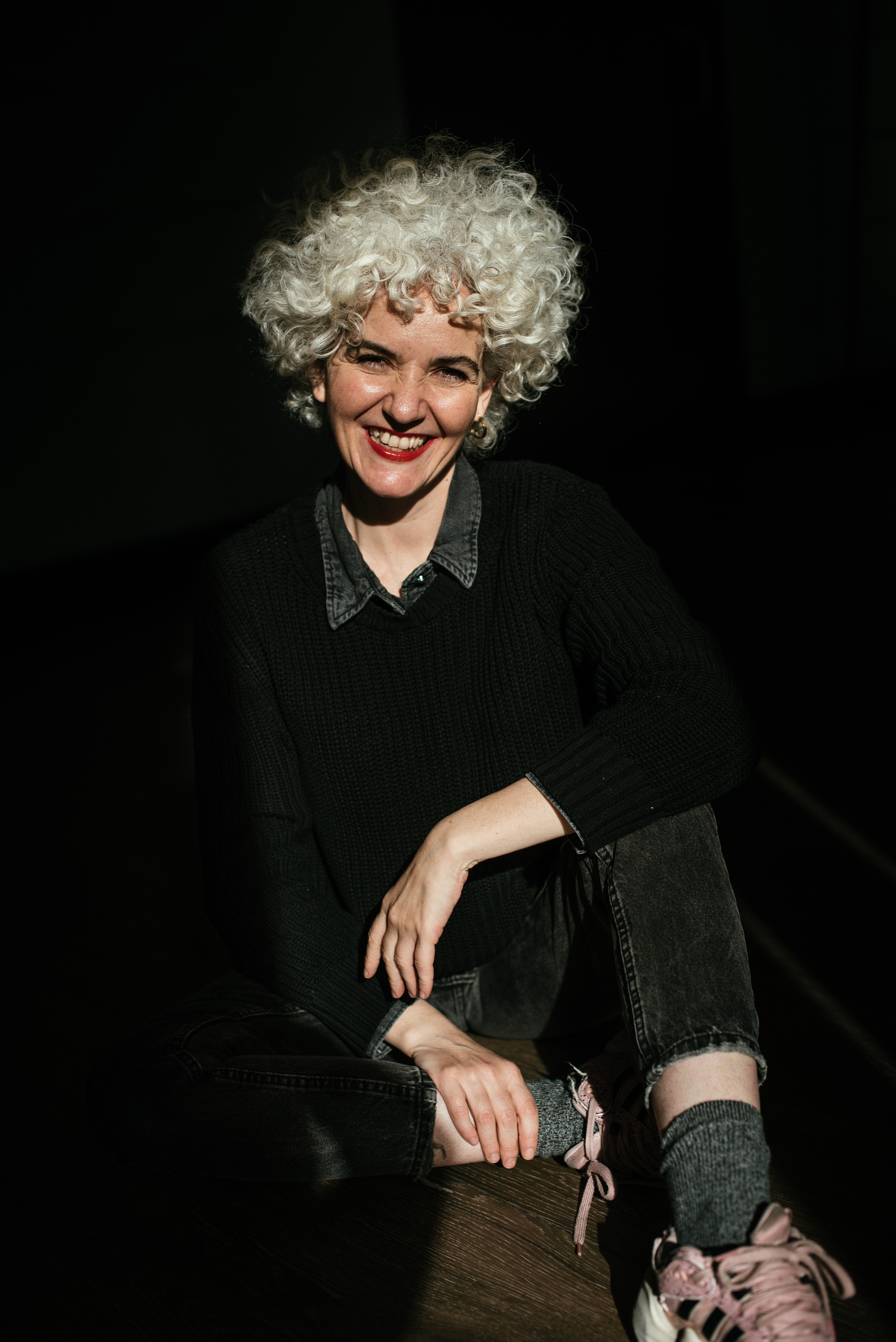
Maria Jerez (Madrid, 1978). El seu treball se situa entre la coreografia, el cinema i les arts visuals. Més enllà de l'interès en les seves primeres peces per les convencions teatrals i cinematogràfiques, i la comprensió implícita de l'espectador d'aquestes, en els seus últims treballs busca qüestionar aquesta relació obrint espais de potencialitat a través de trobades amb allò que trobem estrany i aliè. El seu treball més recent insisteix en la performatividad de la trobada com a espai de transformació. En aquest procés de transformació l'altre s'ubica en un mateix, establint vores difuses entre el conegut i el desconegut, l'objecte i el subjecte, l'animat i l'inanimat. El seu treball tracta d'escapar de les lògiques logocéntricas i antropocèntriques, on el propi coneixement humà es converteix en un una cosa vulnerable davant altres ecosistemes enigmàtics i complexos.
Dins d'aquests treballs es troben les peces en viu "A Nublo" (2021) en col·laboració amb Edurne Rubio; "The Stain" (2019), "Yabba" (2017) i "Blob" (2016, dins del seu projecte curatorial "What Is Third"). Les exposicions "La Mancha" (2021), "Yabba" (2018) o el projecte de recerca "Maria Goes to School" (2015-18), així com les pel·lícules "Maria Gaat Naar School" (2017) en col·laboració amb Edurne Rubio; "Puebla" (2020) i "The Boogie-Woogie Ghost", totes dues en col·laboració amb Silvia Zayas.
Jerez combina la producció del seu treball artístic amb projectes pedagògics, curatoriales i editorials. És autora del llibre "INVENTORY - a choreography of things" (Ed. Fissures 2014-2015), editora de "El cuaderno sin contenido" (BUDA Kunstencentrum 2016), i ha traduït al costat d'Alejandra Pombo el llibre "Spangberguianismo" de Marten Spangberg (Ed. Desiderata 2018) al castellà.
La seva obra forma part de la col·lecció del Centro de Arte Dos de Mayo (CA2M, Madrid).